
The First Step in a Global Career
If you are exploring international teaching for the first time, the term “international school” can feel a little vague.
There are thousands of them around the world, and no two are exactly alike.Some are small and intimate. Others enroll thousands of students across multiple campuses. Some have been part of their host community for nearly a century. Others opened their doors last year. Together, they form a growing global community of schools that share a few common threads. They serve students from many different backgrounds. And the language of instruction is English. They follow internationally recognized curricula and hire educators across the full range of school roles, from classroom teachers to counselors to school leaders. They vary in size, structure, and setting, but they share a commitment to high academic standards, strong professional cultures, and supporting the educators who join them.
To work in one is to be part of something larger: a global profession that spans countries, cultures, and classrooms. Here is a closer look at the schools, the work, and the world you would be joining.
The Basics
Where They Are and Who They Serve
International schools exist in nearly every country in the world, from major capital cities to smaller regional hubs.
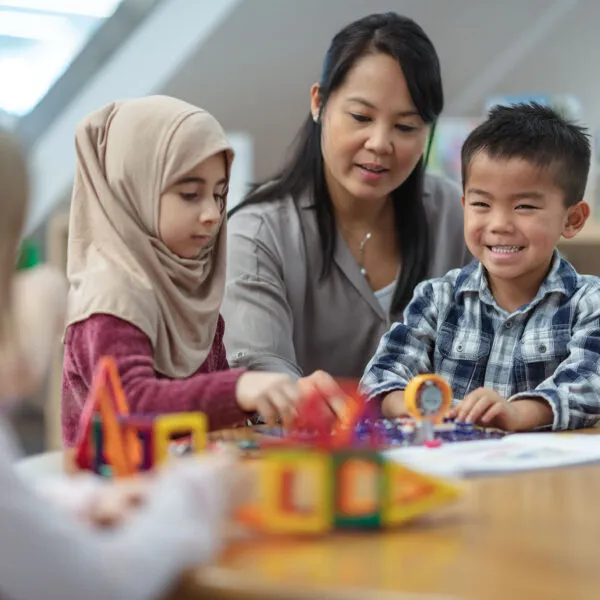
They were originally established to serve the children of diplomats, expatriate families, and globally mobile professionals, and many still do. Today, they also serve significant numbers of host country families who want their children to learn in English and grow up alongside students from many different backgrounds. The student body at most international schools reflects that mix, though the balance varies widely from school to school. Some classrooms include students from a dozen or more nationalities, speaking several languages at home. Others are populated mostly by host country students seeking an English language education and an internationally recognized curriculum. Either way, the experience tends to feel more global than what most educators are used to in the schools they came from.
International schools are sometimes confused with English language schools. They are not the same. English language schools focus on teaching English as a second language. International schools teach a full academic curriculum (English, math, science, history, the arts, world languages, and more), the same kinds of subjects you would find in a school at home.
What They Teach
International schools follow a wide range of curricula, and understanding the basic landscape helps you recognize what kind of school you are looking at.
Many follow the International Baccalaureate (IB), which is recognized by universities around the world and is offered across all grade levels. Others teach an American curriculum, often paired with Advanced Placement (AP) courses at the secondary level. British international schools follow the English National Curriculum and prepare students for IGCSE and A Level qualifications. Some schools teach a national curriculum from another country entirely, such as Canadian, Australian, French, or German. Others blend a host country curriculum with an international one to serve both local and expatriate families. Curriculum is one of the things that shapes a school’s character. It is not the only one.
How They Vary
No two international schools are the same. Schools vary in their governance and ownership models.
Some are not for profit, governed by a board made up of parents and community members.
Others are operated by for profit education companies, including a growing number of well-established international school groups with strong academic reputations. Both models can deliver strong educational outcomes for students. What matters more than the governing structure is how a school is run, what it stands for, and how it supports the students and staff in it. Schools also vary in size, from a few hundred students to several thousand, and in age range, from preschool through grade twelve or only at certain levels.
Accreditation is one more area where international schools vary. Some schools are accredited by recognized agencies such as the Council of International Schools (CIS) or the Western Association of Schools and Colleges (WASC). Others choose not to pursue accreditation, often for practical or contextual reasons that have nothing to do with the quality of the school. The variety across international schools is part of what makes finding the right fit so important. Search Associates provides robust and detailed school profiles to help in that work.
Who Works in Them?
International school faculties are typically a mix of educators recruited from around the world and educators from the host country.
While “teacher” is often the first role that comes to mind, international schools hire across the full range of educational positions: classroom teachers in every subject and grade level, school counselors, college counselors, librarians, learning support specialists, instructional coaches, technology integrators, athletic directors, and school leaders. If a role exists in a school at home, it likely exists in an international school somewhere in the world.
Schools hire educators who are proficient in English, which does not mean English has to be a first language. Educators come into the international school community from every part of the world, and what schools look for is the ability to teach effectively in English alongside the qualifications, experience, and commitment the role requires. In most cases, you do not need to speak the host country language to be considered.
What Makes the Work Different?
Educators who move from a school in their home country to an international school often describe the experience as both familiar and entirely new.
The work itself is recognizable. You are still teaching, still planning lessons, still building relationships with students and families. The subjects are the same. The roles are the same. What changes is the context, and the context is what makes the international school experience so distinct.
The professional community does the same. You work alongside colleagues from across the world, each bringing their own training, experience, and approaches to the classroom. That mix creates a working environment where ideas circulate quickly and assumptions are constantly being tested. Many educators find it the most professionally energizing work of their careers.
The student body reflects the world. In a single classroom you might teach children from a dozen different countries, who speak multiple languages at home and bring perspectives shaped by different cultures and communities. Your students grow up among classmates from many backgrounds, and they often go on to universities and careers all over the world. Teaching them sharpens your own cultural awareness and challenges you to think beyond a single perspective.
Class sizes are often smaller, and professional development is taken seriously at most schools. The pace and culture can feel collaborative in a way that is harder to find in larger systems at home, with educators from many backgrounds working together toward shared goals.
None of this is universal, and every school is different. But the shift is real, and for many educators, it is the experience that reshapes how they teach and how they see the world.
A Community That Supports You
International schools tend to be unusually supportive places to work, especially for educators new to teaching abroad.
Most schools build serious onboarding into the start of every contract: practical help with housing, visas, banking, and settling into a new country, alongside the professional onboarding you would expect at any school. The goal is to set you up to do your best work, both in the classroom and in your new home.
Once you are there, the community itself becomes part of what makes the experience work. Colleagues become close friends because everyone is in it together, navigating a new place, building a life away from where they started, and showing up for each other in ways that are harder to find elsewhere. Many educators describe their international school colleagues as the closest professional friendships of their careers.
That community extends beyond your own building. International schools are part of a wider, connected world of educators, leaders, and schools that share resources, host professional events, and stay in touch across borders.
Once you join that wider community, the relationships and the support follow you, even as you move from one school or country to another.
35 Years. 125 Countries. One Network.
Search Associates has been part of the international school community for more than 35 years. Our network today includes more than 750 member schools across more than 125 countries. Every school in our network has been carefully reviewed before being invited in. If you want to understand how that works, our vetting process is the next place to look.